Prior to white settlers arriving in the 1830s, the Grand River Valley in Lyons and Muir provided fertile land and ample hunting, fishing, and gathering opportunities for its native settlers. In that time, the land was heavily wooded and game, including white tail deer and wild turkeys, were plentiful. The recorded history of this time is scant, but records indicate that members of the Ottawa tribe were established in the area as early as 1707.
The area’s native populations were believed to be the remnants of tribes who were part of the Northwest Territory, and consisted of Ottawas, Chippewas, and possibly Pottawatomies. There were several small villages located along the Grand and Maple rivers.
The region’s early white settlers found trade with its native inhabitants to be lucrative prior to the establishment of villages. One such early area trader, William Hunt, created a trading post along the Grand River, and brought along his wife, who later birthed a child, in what is now considered to be the village of Lyons. Hunt traded commodities such as guns and whiskey to the native peoples in exchange for furs and other items.
Native Americans who lived in the area relied on farming, hunting, fishing and gathering to sustain themselves and their communities. While men took on hunting and fishing responsibilities, women worked close to home – caring for the young, planting and harvesting crops, maintaining fires, and gathering nuts and fruits growing in the wild. While at work, women carried their babies with them by strapping them into a tickenagun. One of the most important local critters was the beaver, who were hunted for their meat and fur (used for trade and in the making of garments and blankets).
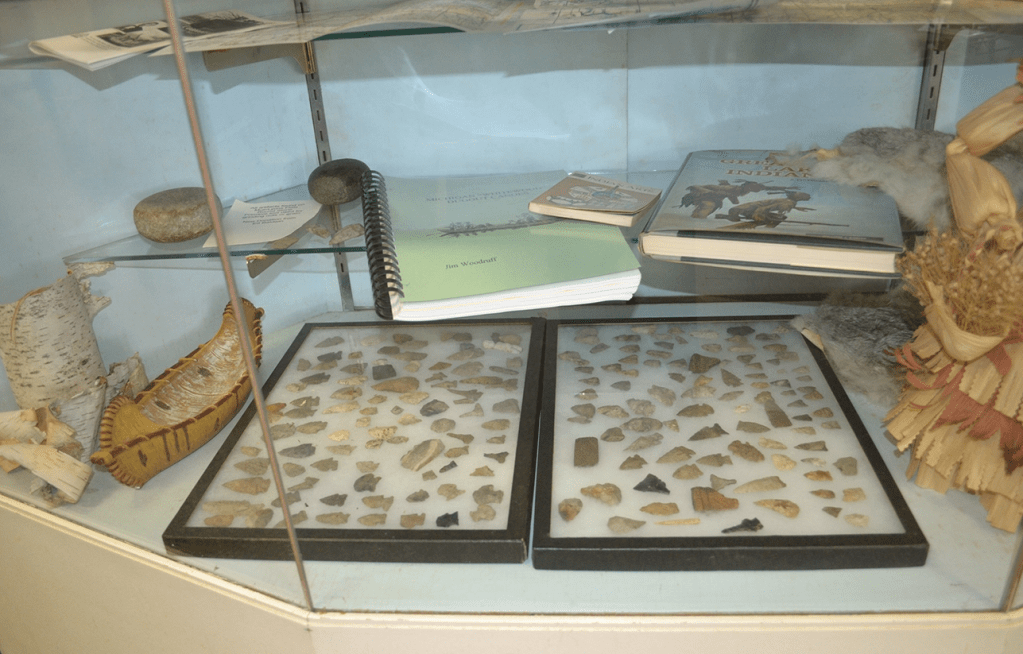
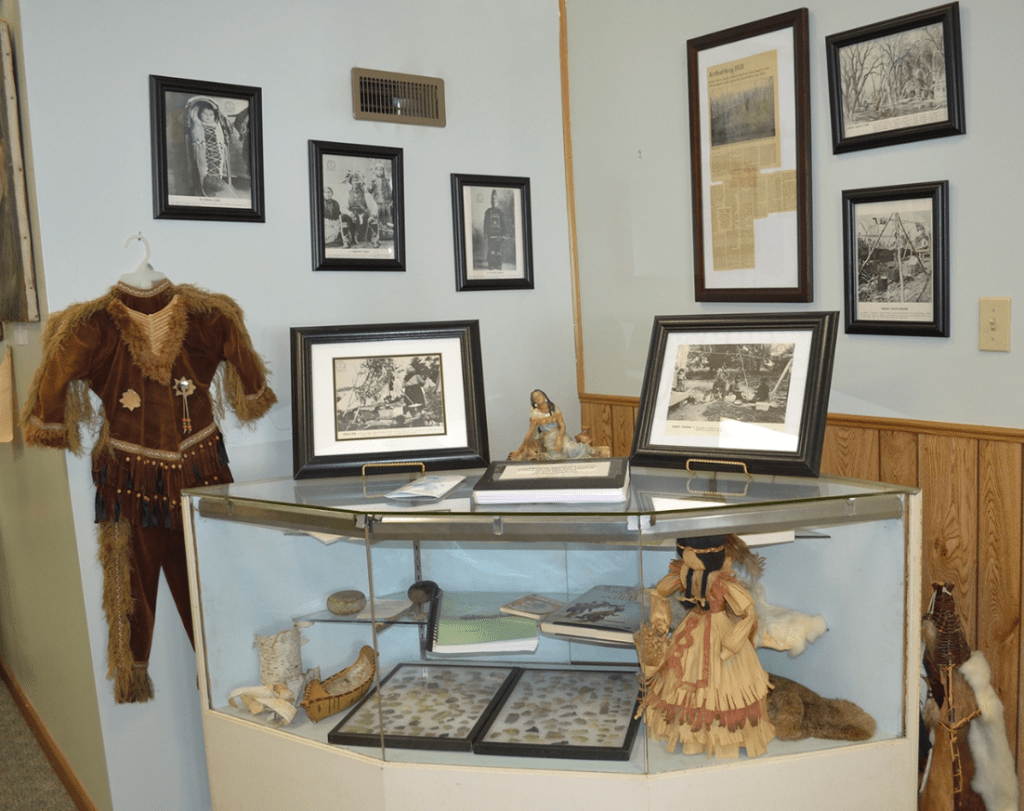
The Lyons-Muir Historical Museum features a collection of arrowheads found throughout the area by local explorers, which are reminders of the region’s early Native American settlements. Images and a newspaper article detailing local excavations are included in the display, as well as traditional clothing and artifacts. The native settlers’ clothing was made using animal skins and pelts, and varied in style based on the season. Their clothes were adorned with beads and shells and featured embroidery done with porcupine quills. While the Museum’s summer open hours are now concluded, you may request an appointment at other times (see contact numbers) to view the displays and other Museum information.
 Lyons-Muir Historical Museum
Leave a comment